How to Speed Up D&D Combat: 9 Fixes That Actually Work
A session that fits one fight is a bookkeeping problem, not a rules problem. Nine changes that cut combat length without touching a single rule.
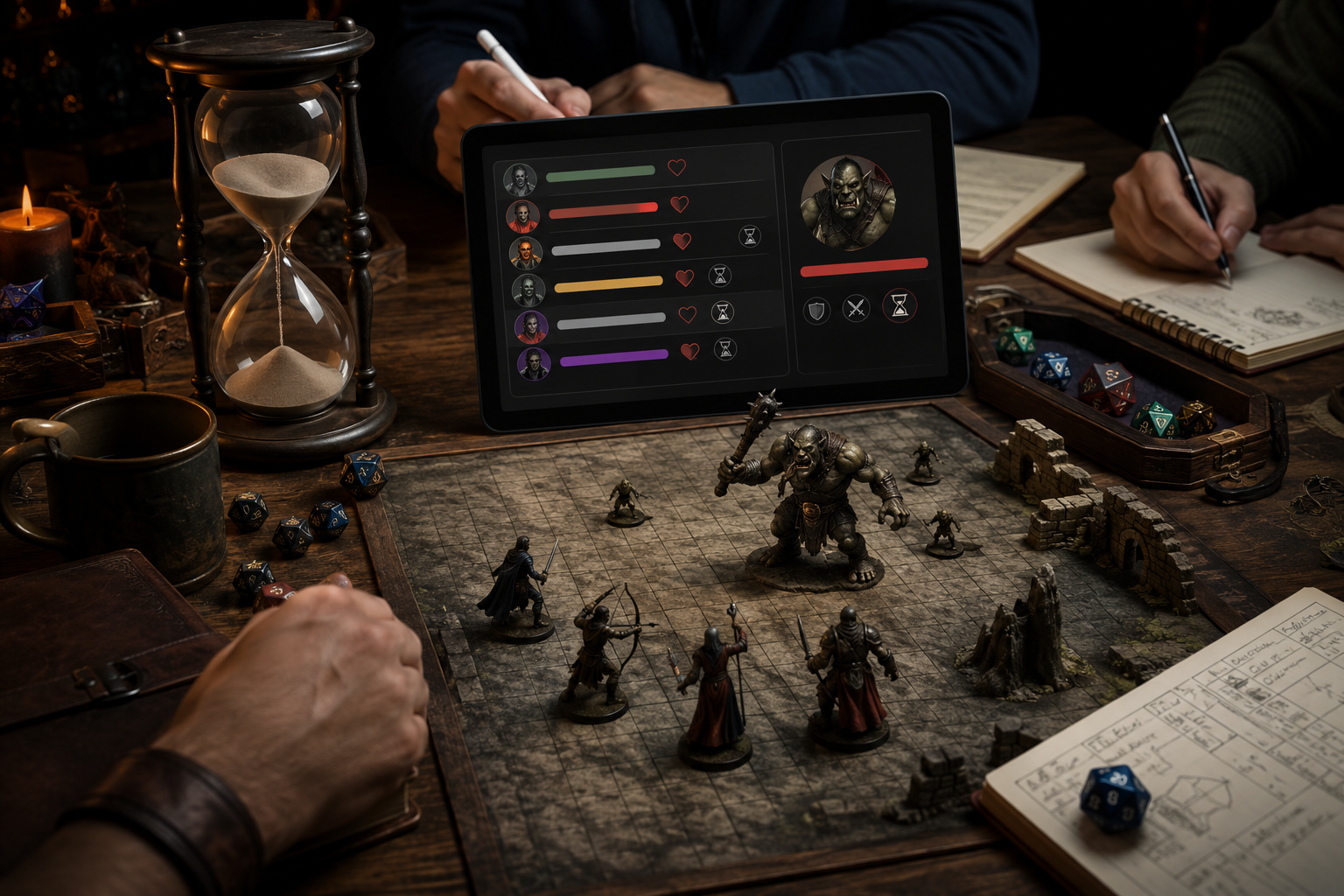
A three-hour session that fits one combat is not a rules problem. It is a bookkeeping problem. Watch a slow fight closely and most of the clock disappears into pauses that have nothing to do with tactics: working out whose turn is next, asking how much HP the ogre has left, checking whether a condition expired, or waiting while a player who has had four minutes to think starts thinking now. Fix the pauses and the same encounter takes half as long — without touching a single rule.
1. Roll initiative once per group
Six goblins do not need six initiative results. Roll once for the group and let them act together. You lose almost nothing tactically and you cut the turn count from twelve to seven. For mixed encounters, roll once per type — goblins together, the hobgoblin captain separately, since that one actually makes decisions.
2. Pre-roll or average monster HP
Rolling 8d8 mid-fight for a monster the party will kill in three rounds is pure dead air. Use the average printed in the stat block, or roll HP for the whole encounter before the session starts and write the numbers down. Nobody has ever had a worse time because an ogre had 59 HP instead of 63.
3. Tell players when they are on deck
This is the single highest-leverage change on this list. When you announce the current turn, also name the next one: "Kira, you're up — Bram, you're after her." Bram now has a full turn's worth of time to decide, look up his spell, and do the arithmetic. Turns stop starting from zero. A shared initiative display does this for you permanently, because every player can see the order without being told.
4. Use a soft timer, not a hard one
Hard timers make people anxious and rushed decisions are usually boring decisions. Instead, agree on a norm: if you are not ready when your turn arrives, you take the Dodge action or move and pass. Announce it once at session zero, apply it gently twice, and the table self-corrects. You almost never have to enforce it again.
5. Track conditions with an expiry, not with memory
"Wait, is he still paralyzed?" costs thirty seconds and it happens constantly. Every condition needs two things written down: what it is, and the round it ends. If you are tracking that on paper, put the expiry round next to the name rather than the duration — "ends round 7" needs no mental subtraction, "3 rounds" does. Tools that count it down automatically remove the question entirely.
6. Fewer, tougher monsters
Encounter difficulty scales with total HP and damage, but duration scales with the number of turns. Four monsters at double HP is roughly as dangerous as eight monsters and runs in half the time. This also makes each individual monster feel more threatening, which is usually what you wanted from the fight anyway.
7. Let players resolve their own attacks completely
A common pattern: player rolls to hit, announces the number, waits for you to say "hit", then rolls damage, then announces damage. That is three handoffs per attack. Tell the table the target's AC once it has been hit, and have players roll attack and damage together and report one result: "19 to hit for 11 slashing." You just removed two thirds of the exchanges.
8. Stop narrating misses in detail
Narration is why we play, but a miss does not need a paragraph. Save the cinematic description for hits, kills, critical failures, and turning points. Misses get a sentence at most. Ten saved sentences per round is minutes per fight.
9. End the fight when it is decided, not when it is finished
When the boss is down and three wounded goblins are fleeing, you do not need four more rounds of mop-up. Narrate the ending. Players remember the moment the fight turned, not the last hit point. This is the hardest habit on the list to build and the one that saves the most time.
Where the tooling helps
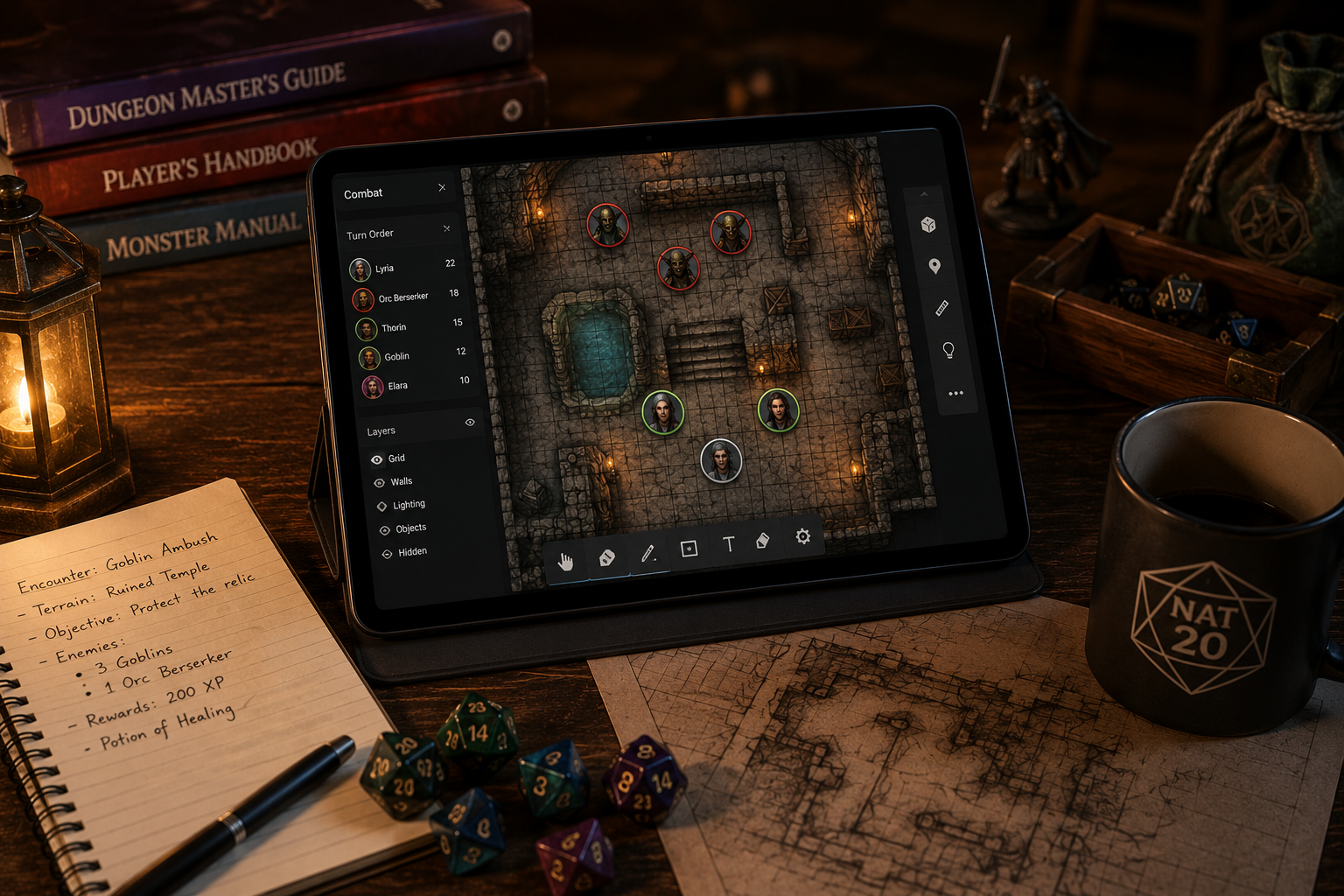
Points 3 and 5 are the ones a tool genuinely solves, because they are about shared visibility rather than discipline. Nat20's free online initiative trackerkeeps the order, current HP, and condition timers on screen for the DM and mirrors it to every player, so "whose turn is it?" and "is that still active?" simply stop being asked. It works as part of the free virtual tabletop or on its own as a screen next to a physical table.
Try one at a time
Do not adopt all nine at once — you will drop most of them by week three. Take the on-deck announcement and the average-HP change this week, since neither requires anything from your players. Add group initiative next. By the time those three are automatic, you will have bought back most of the time you were losing, and the rest are optional refinements.