How to Track Characters, Items, and Loot Across a Long Campaign
Long campaigns accumulate people, items, and gold. A light system for tracking all three so nothing important slips through the cracks.
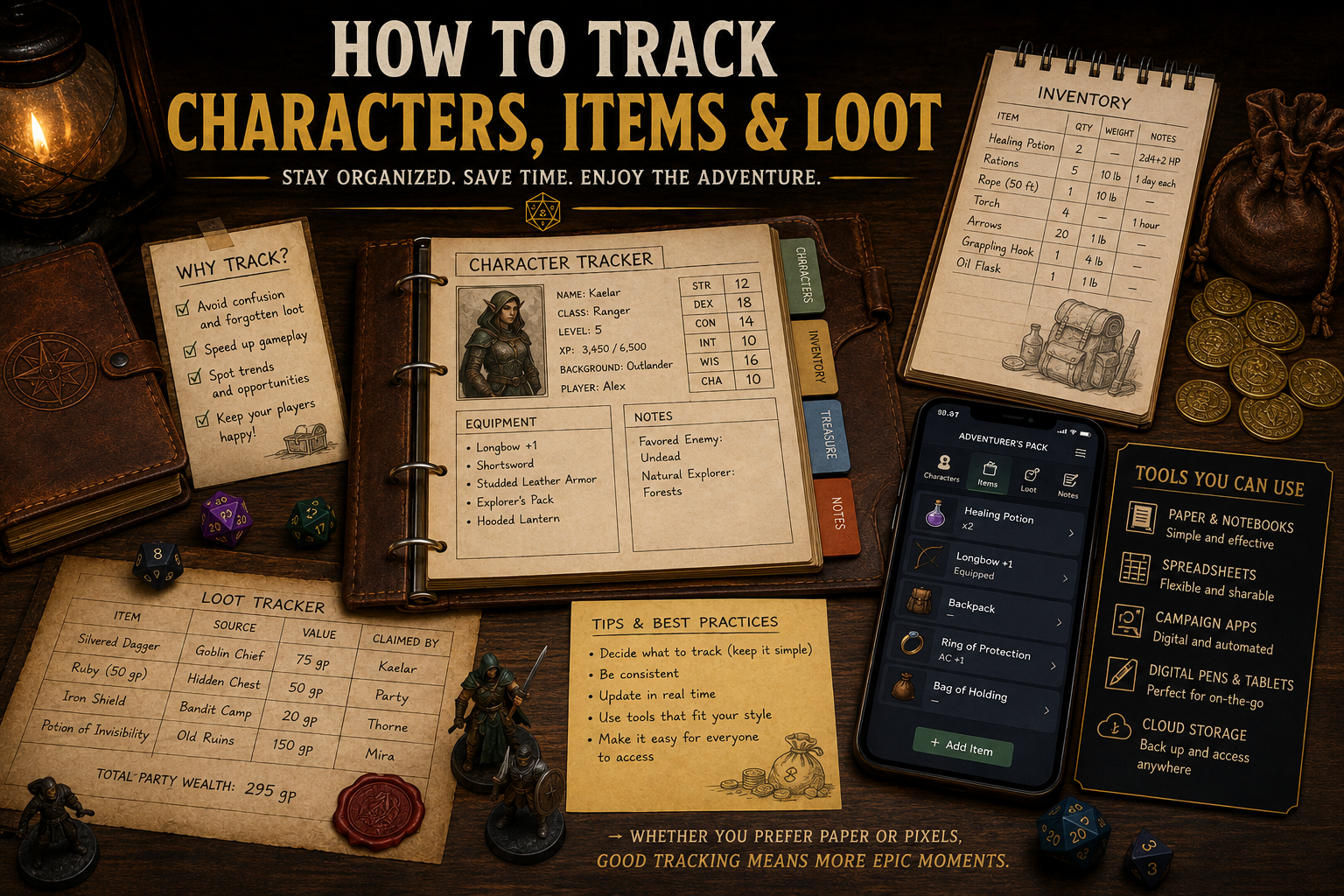
A long campaign accumulates stuff: the NPC met in session three who becomes pivotal in session thirty, the cursed blade nobody remembers picking up, the 4,000 gold the party swears they earned. Without a system, this drift becomes a slow leak of continuity — and continuity is exactly what makes a long campaign feel epic rather than episodic. Here's how to track people, items, and loot so nothing important slips through the cracks.
Track characters as living records, not stats
For player characters, the sheet handles the numbers — but the storyof a character needs its own home: their relationships, debts, secrets, and the promises they've made. For NPCs, record just enough to bring them back convincingly: a name, a voice or quirk, what they want, and the last thing they did to (or for) the party. A one-line entry per NPC is plenty and pays off enormously the day a player says "let's go back and talk to that merchant."
Give every item a paper trail
Magic items and quest objects cause the most arguments because they change hands, get identified late, or turn out to matter more than anyone realized. For each significant item, note:
- Who has it right now.
- Where it came from — the encounter or NPC that provided it.
- What's known vs. hidden — has it been identified? Is it cursed?
- Why it matters — any plot hooks attached to it.
Keeping items as shared entries also means players can look up what they're carrying without pinging you between sessions.
Handle loot and gold at the table
Party treasure is a classic source of drift. Two rules keep it clean:
- Record loot the moment it's awarded, not "later." Later never comes, and the argument about who got what surfaces at the worst possible moment.
- Keep a running party totalfor shared funds, and log big expenditures. When the party wants to buy a ship or bribe a duke, you'll know instantly whether they can afford it.
Link everything to your sessions
The real superpower is connection: knowing that the amulet the party carries came from the lich in episode seven, who serves the faction they're about to betray. Isolated notes can't show you that; linked ones can. This is where a purpose-built tool earns its keep. In Nat20, your campaign episodes can reference the exact monsters, items, and NPCs from a ruleset, so a single click takes you from "the cursed blade" to its full entry and every session it's appeared in.
Recap at the start, log at the end
Bookend every session with two small habits. Open with a two-minute recap — ideally one your players can read beforehand — so everyone starts on the same page. Close by spending five minutes logging what changed: new items, gold gained or spent, NPCs met, threads opened. Because it's written where the whole table can see it, nobody has to rely on your memory alone.
The payoff
Good tracking isn't bookkeeping for its own sake — it's what lets you pay off a setup from thirty sessions ago, reward the player who remembered a minor NPC's name, and keep a sprawling story coherent. Set up a light system early, keep it current at the table, and your long campaign will feel less like a pile of sessions and more like a saga. Start tracking your campaign and see how much smoother the next thirty sessions run.