Free vs Paid Virtual Tabletop — What You Actually Get in 2026
An honest breakdown of what the free tier gives you on Roll20, Foundry VTT, Owlbear Rodeo, and Nat20 — and where the paywalls hit. No marketing, just the comparison.
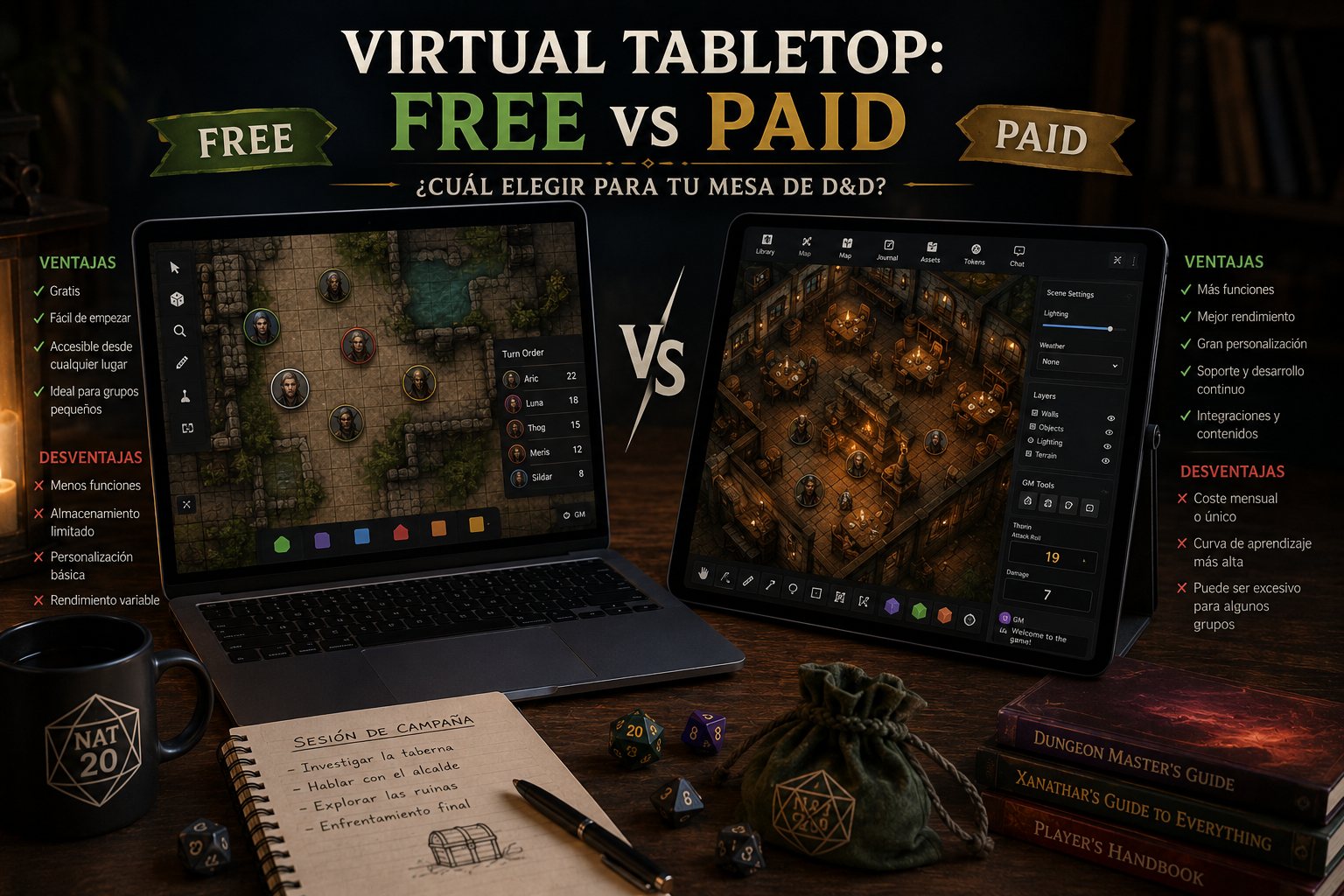
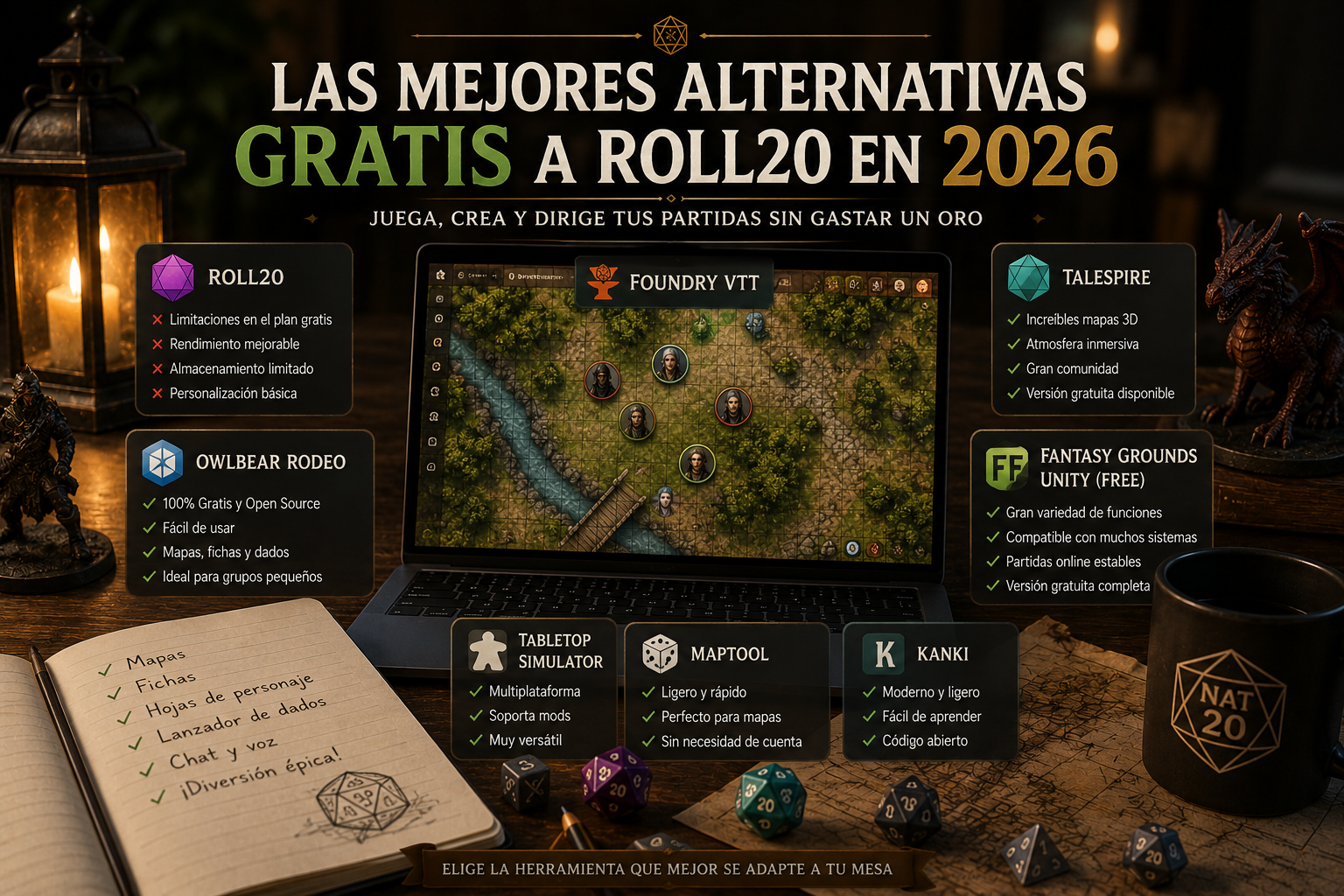
The virtual tabletop market splits cleanly into two tiers: platforms that are genuinely free and platforms that use a free tier to upsell you. The difference matters more than most newcomers realise, because you often only discover the wall when you're mid-campaign.
This is a practical breakdown — what the free tier actually gives you on each platform, where the paywalls hit, and whether paying is worth it.
The free tier trap
Most paid VTTs offer a free tier that covers enough to get you hooked, then restricts the features that make sessions actually smooth: dynamic lighting, character sheet automation, storage limits, module access. The free tier isn't a product — it's a demo.
This isn't a criticism of the business model. Building and maintaining a VTT is expensive. But it's worth being clear-eyed about what you're signing up for before you build a campaign around a platform.
Roll20
Free tier covers: Basic maps, token movement, dice roller, limited storage (100MB), text/voice chat.
Paywall hits at: Dynamic lighting, character sheet automation, API access, HD maps, fog of war, most marketplace content. Plus tier is ~$10/month per user — meaning the GM and every player who wants full features pays separately.
Verdict: Usable for simple games on free. Frustrating for anything complex. The per-user pricing model is the biggest pain point — a group of five players looking at $50–70/month combined for a full-featured experience.
Foundry VTT
Cost: ~$50 one-time purchase by the GM. Players join free.
What you get: Everything, no recurring fees. Dynamic lighting, scene transitions, a massive module ecosystem, active development. The most feature-complete VTT available.
The catch:You have to host it yourself (runs on the GM's computer, which must stay on during sessions) or pay for a hosting service (~$5–10/month). Self-hosting works fine on a decent machine with a stable connection; it becomes a problem on laptops that sleep or on poor home internet.
Verdict: The best value for serious long-term campaigns. The one-time cost is fair. But it requires technical comfort with self-hosting or an ongoing hosting fee.
Nat20
Cost: Free forever. No tiers, no paywall, no subscription.
What you get:Combat tracker, dice roller, battle map, session notes, ruleset references (D&D 5e SRD built in), campaign archive, community content. Works for online sessions with players connected or as a standalone GM screen at a physical table.
The catch:Younger platform than Roll20 or Foundry. Feature set is complete for running sessions but doesn't have the deep module ecosystem or the automated character sheet integration of paid platforms. If you need heavily automated rules (attack roll → damage → condition application in one click), it's not there yet.
Verdict: The best genuinely free option. No walls to discover mid-campaign. The right choice if you want a full session toolkit without a recurring cost.
Owlbear Rodeo
Cost: Free (with a paid tier for storage/features).
What you get (free): A very clean battle map and token system. No account required to join a room. Fast setup.
What's missing:Everything except the map. No dice roller, no character sheets, no campaign archive, no ruleset references. It's a map tool, not a session platform. Pair it with Discord for voice and a separate notes app and it works — but you're stitching together three tools.
Verdict:Best-in-class for the specific job of “I just need a shared battle map.” Not a complete VTT replacement.
Fantasy Grounds
Cost: $4/month (standard) or $10/month (ultimate). GM must have Ultimate for players to join free; otherwise players need their own licence.
What you get:Deep rules automation, official D&D content integration, active development.
Verdict: Powerful but expensive and has a steep learning curve. Worth it for groups that play frequently and want maximum automation. Overkill for casual groups.
The honest comparison table
| Platform | True cost (GM) | Battle map | Dice | Rules reference | Campaign archive | GM screen (no players) |
|---|---|---|---|---|---|---|
| Nat20 | Free forever | ✓ | ✓ | ✓ (5e SRD) | ✓ | ✓ |
| Roll20 | Free / $10/mo | ✓ (limited free) | ✓ | Paid | ✓ | — |
| Foundry VTT | $50 one-time | ✓✓ | ✓✓ | ✓✓ (modules) | ✓ | — |
| Owlbear Rodeo | Free | ✓✓ | — | — | — | — |
| Fantasy Grounds | $4–10/mo | ✓ | ✓✓ | ✓✓ (official) | ✓ | — |
Which to choose
- No budget: Nat20 for the full toolkit, Owlbear Rodeo if you only need a map.
- Serious long-term campaign, GM will self-host: Foundry VTT — one-time cost, no ongoing fees, best feature depth.
- Your group is already on Roll20: Stay there if it's working. Switch if the paywalls are frustrating you.
- Rules automation is the priority: Fantasy Grounds or Foundry with D&D Beyond integration.