How to Organize a D&D Campaign: A Complete Guide for New Dungeon Masters
A repeatable structure for planning a D&D campaign that survives contact with real players — premises over plots, three layers of prep, and one source of truth.
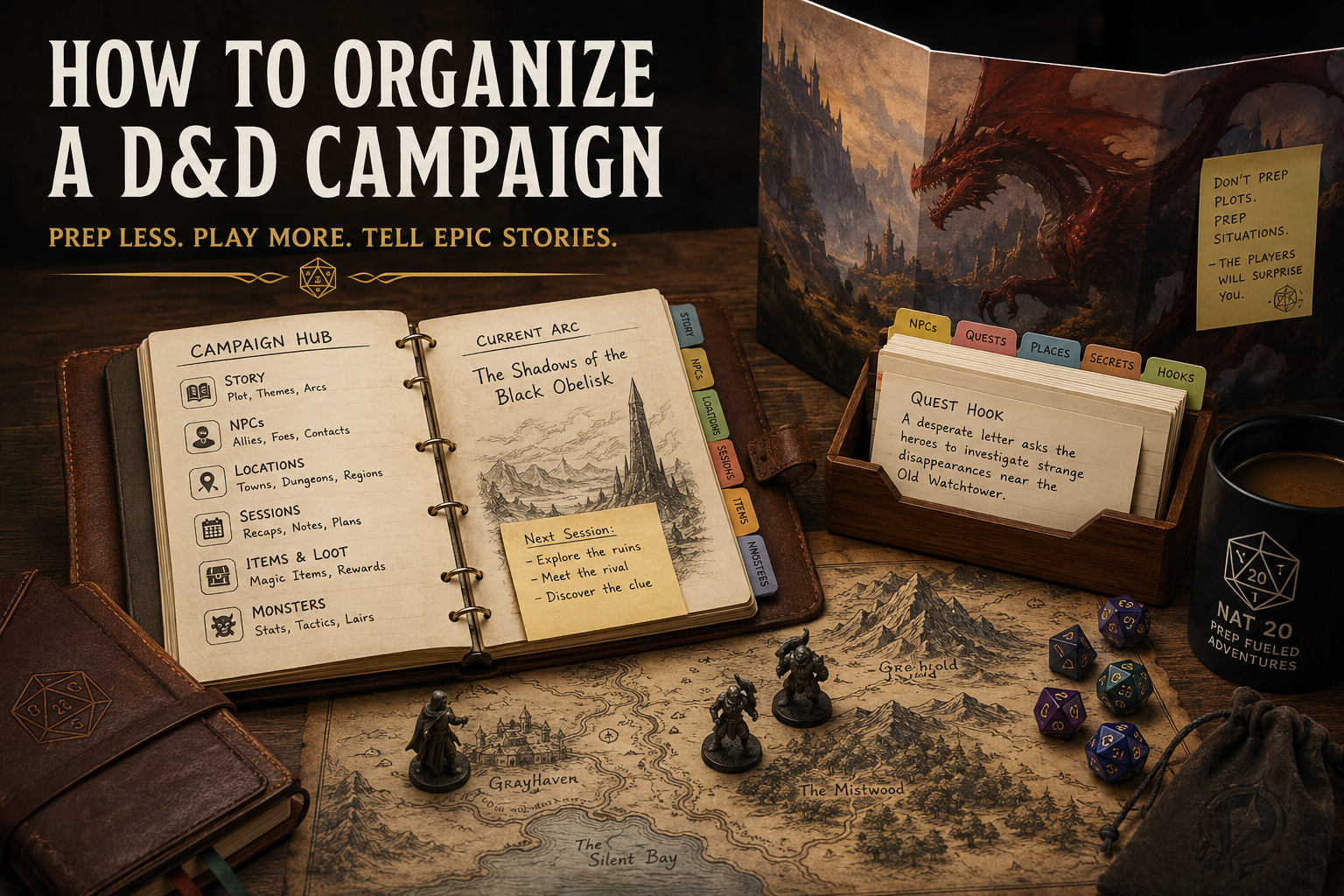
Running your first tabletop campaign is equal parts thrilling and terrifying. You have a world in your head, a group of friends around the table, and a growing pile of notes that somehow never answers the question a player just asked. The difference between a campaign that fizzles out after three sessions and one that runs for years almost never comes down to rules mastery — it comes down to organization. This guide walks you through a repeatable structure for planning a Dungeons & Dragons campaign that stays fun for you and your players.
Start with a premise, not a plot
New Dungeon Masters often try to write a novel: a fixed sequence of events the party must march through. Players ruin novels — that's their job. Instead, write a premise: a situation with tension, a villain with a goal, and a ticking clock. "A cult is trying to wake a buried god beneath the city, and they have five weeks" is a premise. It gives every session a direction without scripting how the party gets there.
Build the campaign in three layers
Think of your prep in three nested layers, from slowest-changing to fastest:
- The world layer — the setting, factions, and history. This changes rarely. Write only what the players might touch in the next few sessions; you can always expand outward later.
- The arc layer— the current storyline, usually 4–8 sessions. Track the villain's plan and what happens if the party does nothing.
- The session layer — the one you actually prep each week: likely scenes, key NPCs, a couple of encounters, and the rewards on offer.
Keeping these separate means a single canceled session never forces you to rewrite the whole campaign — you only ever adjust the layer that changed.
Prep the session, not the outcome
A reliable weekly checklist beats hours of freeform world-building. Before each session, jot down:
- A strong opening scene that puts a decision in front of the party immediately.
- Three to five "beats" — things that are true and will happen unless the party intervenes.
- Two or three stat blocks you might need, pulled and ready.
- The rewards, secrets, and clues available this session.
Notice what's missing: a predetermined ending. Prep the ingredients, let the players cook.
Keep one source of truth
The single biggest organizational failure is scattered notes — a notebook here, a chat message there, a character detail you swear you wrote down somewhere. Pick one home for your campaign and put everything in it: the arc, the NPCs, the recap of what happened last time, and the loose threads you want to pull on later.
That's exactly what Nat20 is built for. You can create a campaign, write each session as an episode, and reference the monsters, items, and NPCs from a shared rulesetso your world stays consistent from week to week. Because it's collaborative, your players can read the recap before the next session instead of relying on your memory of who betrayed whom.
Run a session zero first
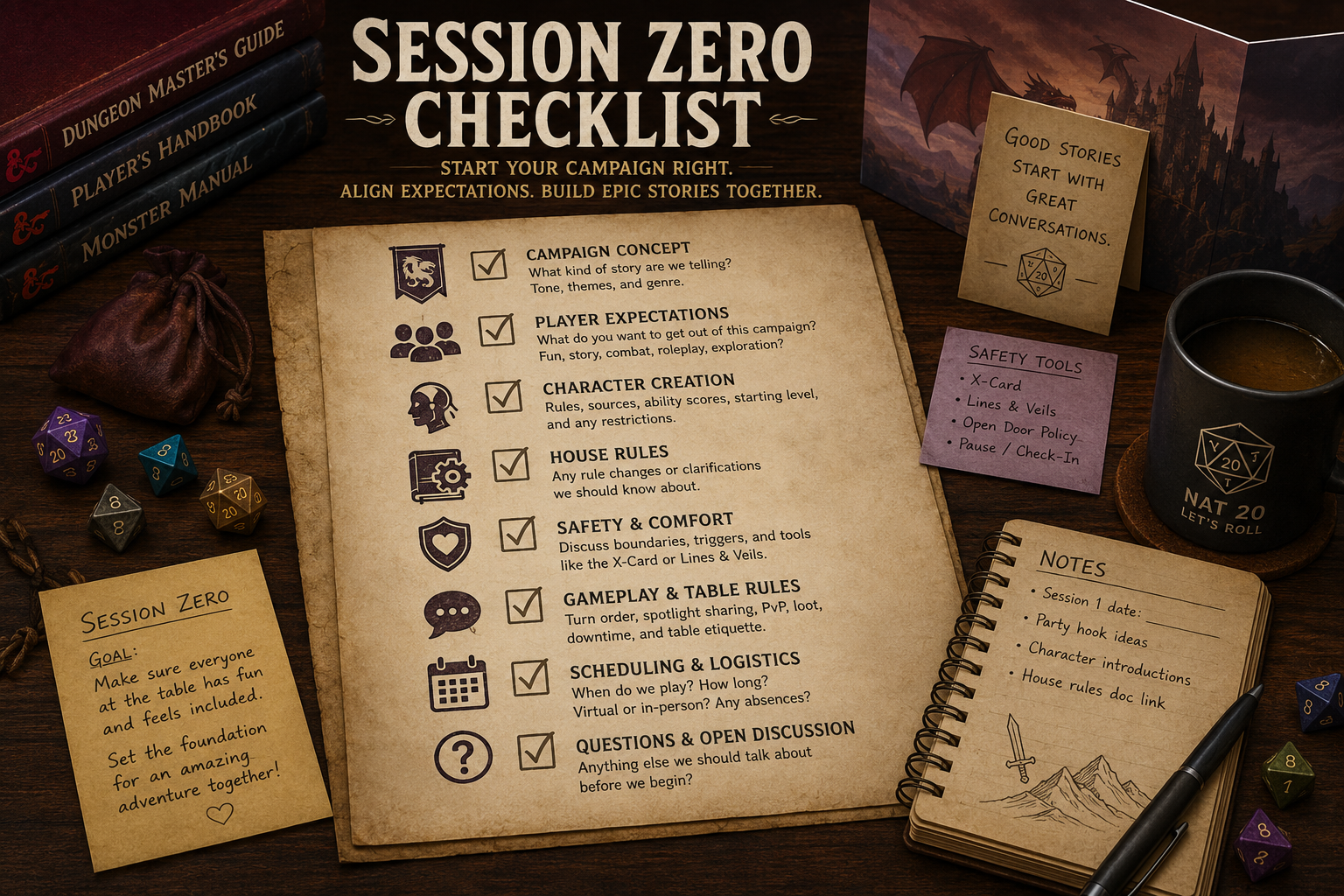
Before any dice hit the table, gather your group for a session zero: align on tone, safety, schedule, and the kind of story everyone wants to tell. It is the highest-leverage hour you will spend on the whole campaign — enough that it deserves its own checklist.
Let it breathe
Finally, resist the urge to plan everything. The best campaign moments are the ones you didn't script — the NPC the party adopted, the plan that went sideways, the villain who became sympathetic. Organize enough to feel confident, then leave room for the table to surprise you. That balance, maintained session after session, is what turns a premise into a campaign people talk about for years.